Recording and analysing sferics in the ULF/VLF spectrum
Storm sounds
"Storm sounds" are recorded with a ULFUltra Low Frequency/VLFVery Low Frequency antenna. They are what's known as sfericsshort for atmospherics: natural electromagnetic pulses generated by lightning during storms. In reality, these are radio recordings. Sound is a vibrating mechanical wave, whereas a ULFUltra Low Frequency/VLFVery Low Frequency radio wave is an electromagnetic wave. The spectrogramgraphical representation of a radio signal lets you analyse the received signals to work out what type of event occurred. These recordings aren't free of human-made interference. The 50 Hz mains current, combustion vehicles and especially electric vehicles are well-known sources. That's why a quiet electromagnetic environment, far from large urban centres, is preferred. Enjoy the listen! Using the spectrogram (?)
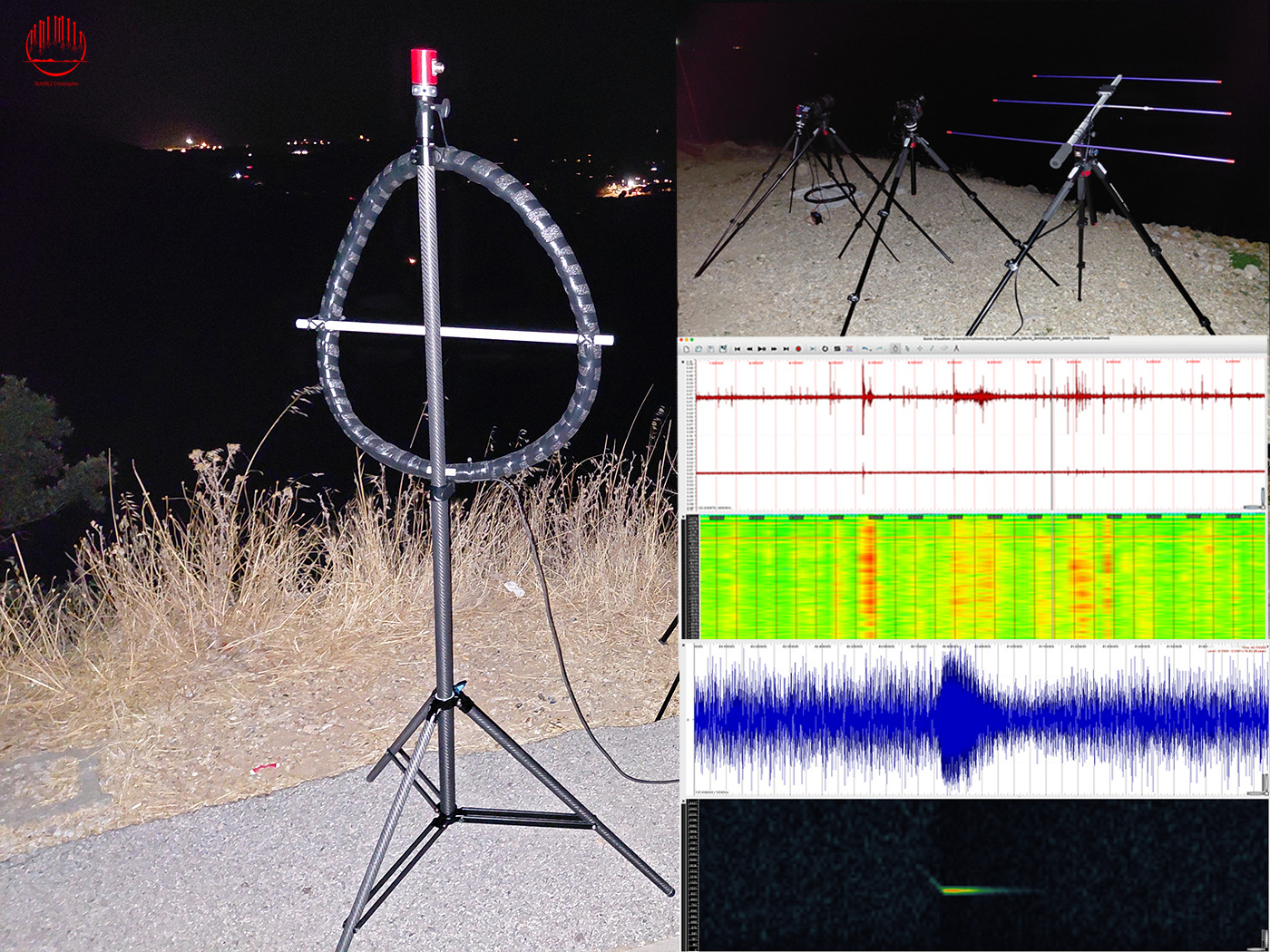
Prefer a LINE IN input (MIC input if unavailable).
Pay attention to the grounding quality with E-field (electric field) antennas. H-field (magnetic) antennas pick up the magnetic component of the signal. The results seem quite clean, with a better signal-to-noise ratio than my E-field antennas. In reality, both are complementary.
Try to get as far as possible from the electrical grid. The 50 Hz mains hum and its harmonics are a real pain for sferic reception. Failing that, simple or more advanced (rejection) filters exist. In post-production, it's possible to reduce or even remove certain hums, but at the cost of some quality loss in parts of the spectrum. What matters most is the first 10 kHz, so keep that range as clean as possible.